Decency
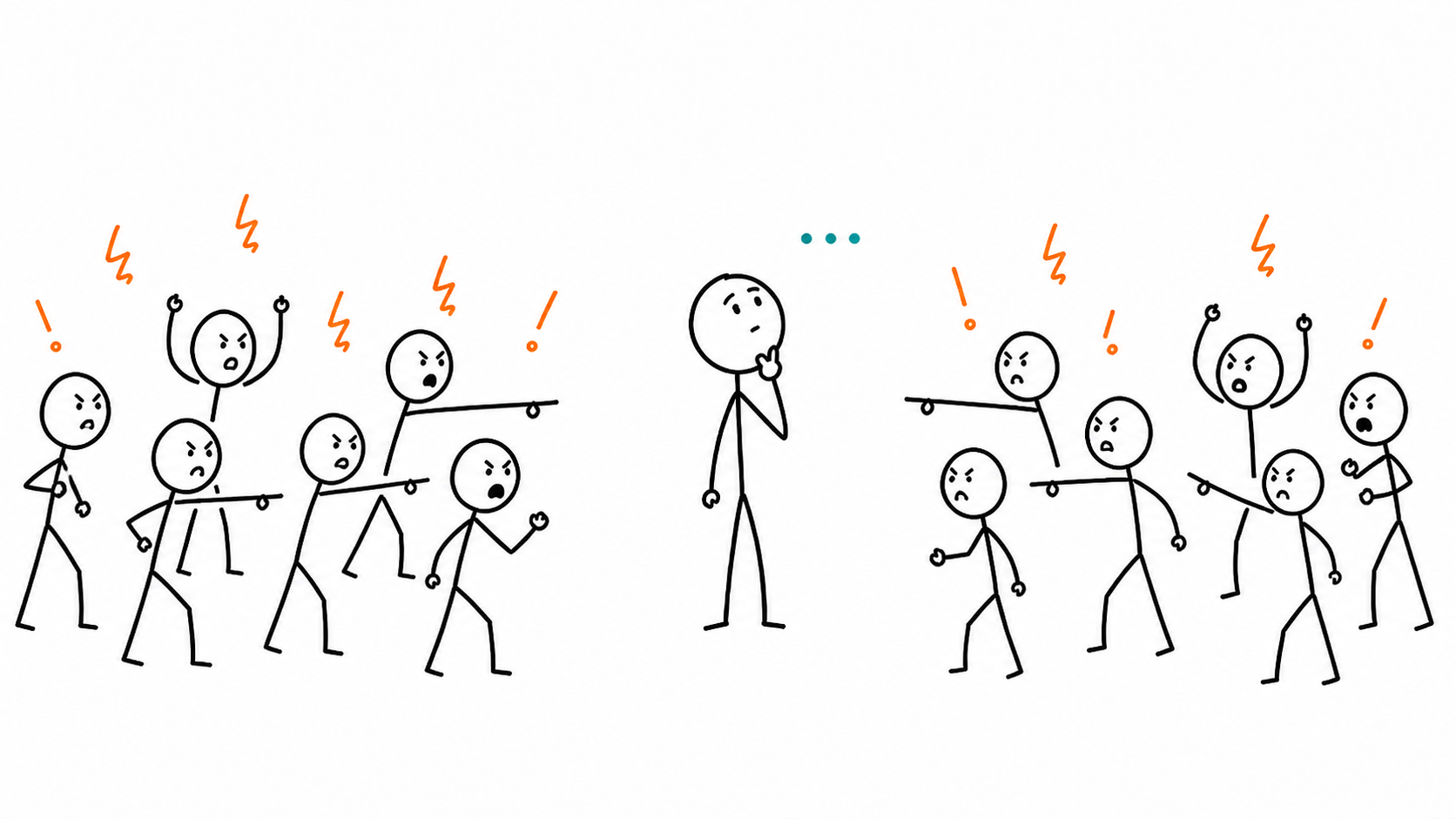
Many people seem to believe that decency is a luxury, like polite language – nice to have, but not relevant when it’s time to fight for what we believe in. I think that’s backwards, and the distinction is a core reason why our politics and online debate are so often toxic and unproductive.
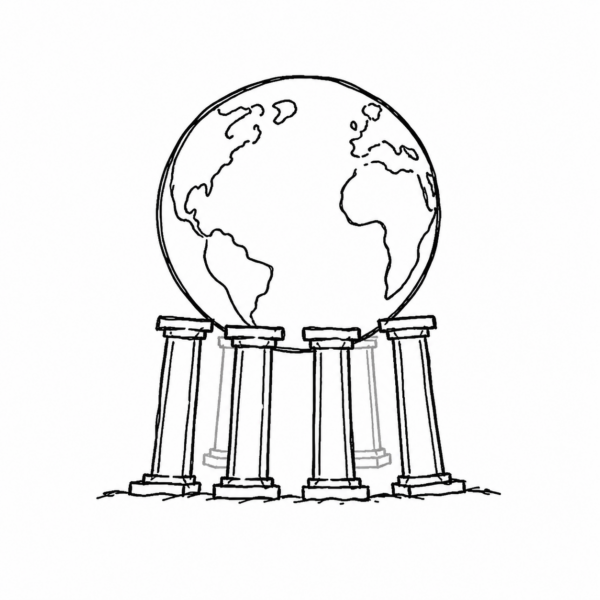
Decency is, in fact, a necessary protocol for a properly functioning system.
Fundamentally, decency encompasses a commitment to honesty, fairness, and consistency in how we treat people and how we handle truth—especially under dislike or disagreement. It is about epistemic and moral integrity.
This is not the same as politeness or propriety, which are more oriented towards social norms and can be co-opted to shut down speech. It is also not the same as kindness, which can be weaponized to demand comfort at the expense of truth.
We all know deep down what decency feels like, and what its lack feels like. Yet, as a society, we’ve stepped away from its practice and harmed ourselves in the process.
Cost of Indecency
When someone operates with decency, it is an easy signal that they will continue in a way that’s truthful, consistent and fair. If they treat people well, seek truth in arguments and apply standards consistently, others don’t have to expend a lot of mental effort to make sure they will act that same way down the road. In aggregate, it creates stability.
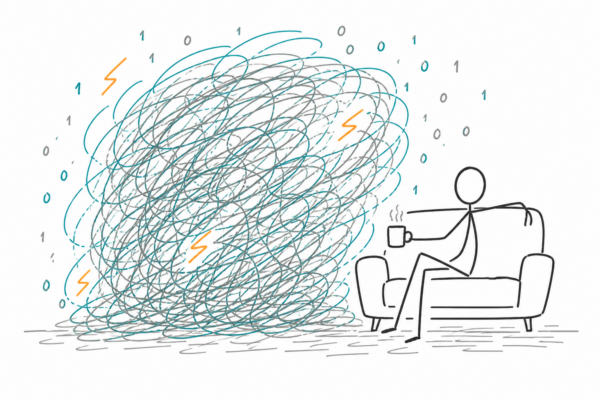
When someone operates without decency, it creates a constant friction cost on everyone, because people can no longer trust that truth, consistency and fairness will be surfaced, or that the person’s claims are honest and not performative. In aggregate, it creates a growing spiral of attention cost that eventually collapses.
This isn’t just a problem for people arguing on the Internet. When a system operates with minimal decency, it no longer has the necessary feedback loop that allows for self correction and it drifts far off its axis before a hard correction is necessary to yank it back. Put another way, a society whose foundations have melted into bullshit can’t stand for long.
Politics and Discourse
Politics is a tension between two things:
- Intellectually, the search for truth and tradeoffs between collective choices
- Tangibly, how power is used and who pays the costs
In order to do these things effectively, it’s necessary to arrive at agreement about what is happening, what options are available and what the tradeoffs are between them. An effective debate surfaces this and allows us to find a path that honors everyone’s values. An effective policy does this with clarity and humanity.
Politics and discourse break when the game becomes about status seeking, identity defense and performative dominance. These things optimize for short term gains while steadily degrading our ability to create signal from the noise.
Responding with “oh yeah, what about when [your assumed tribe] did [other controversial thing]?!” is a constant and easy deflection from truth-seeking. (Whataboutism)
Dunking on poorly thought-out social posts to humiliate random people is about status signaling, which incentivizes rigid ideology and tribalism instead of curious inquiry. (Moral Grandstanding)
Cherry picking the weakest form of someone’s argument, especially to drive emotionality, makes no attempt to create understanding. (Strawmanning)
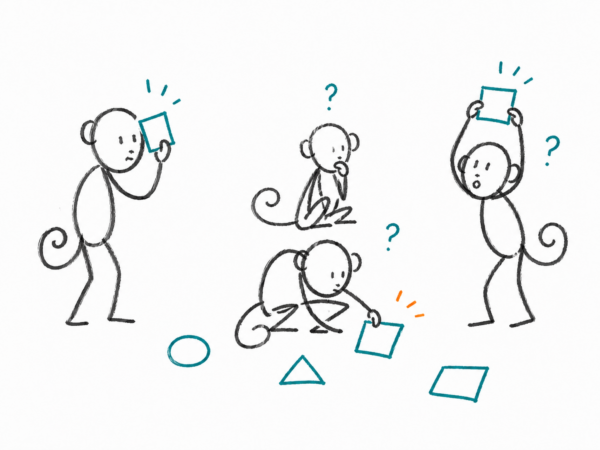
Willfully grasping for convenient facts while disregarding alternative views creates a landscape where we can’t even agree on shared reality. (Motivated Reasoning)
Each of these behaviors is endemic to the current political and online landscape, and that’s because they really work in the short term to carve up a debate into scoring points for a particular ideology or identity group. When done at scale and with repetition, they have the power to actually sway opinions, thanks to a whole host of cognitive biases that result in us believing what we’re exposed to frequently rather than what’s right.
Politeness, Social Change and Satire
It appears that decency and broad scale social change are incompatible but that is incorrect.
Decency isn’t the same as politeness. Politeness, which optimizes for emotional regulation and social harmony, can be used by the powerful to justify silencing their critics and entrenching a dynamic where some groups lose by default. None of the successful social movements of the 20th century (eg civil rights) were considered polite at the time – they had to highlight a power imbalance by breaking social norms and expressing rage within bounds in order to overcome the inertia of the status quo. But they still operated in support of truth, fairness and moral integrity.
Individual acts like standup comedy or even a raunchy cartoon like South Park may use satire, anger, mockery or moral pressure, which are considered impolite, in order to justifiably speak truth to power. These acts regularly reject the rigidity of propriety but still (when we can consider them decent) hew to the deeper search for truth and ultimately the expression of societal empathy.
Not every social movement or satirical actor gets the balance right, and they have the difficult job of exposing contradictions and targeting hypocrisy without overextending into disproportionality. Their emotionality needs to be used in the service of clarifying deeper truths rather than obscuring them.
Trolling is the corrupted form of this. The typical online troll believes that they’re performing effective satire but they aren’t. Satire is impolite truth-telling which distorts presentation to clarify reality. Trolling is attention-seeking disruption which distorts reality to provoke reaction.
In finding the distinction, it’s helpful to internalize incompatibilities. You can’t be dishonest and decent, hypocritical and decent, willfully unresponsive and decent or contemptuous of truth and decent.
4 Horsemen of Bad Discourse
Decency is about the process and protocol that leads to the search for truth, fairness and consistency, not a statement of specific values. Two people can view the same controversial act or policy or politician and come to very different but still reasonable conclusions, all within the bounds of decent debate and intent.
To operate with decency means trying to find the core values misalignment at the root of the difference in conclusion without being lured by the previously mentioned 4 Horsemen of Bad Debate:
- Whataboutism (deflection)
- Strawmanning (distortion)
- Moral Grandstanding (preening)
- Motivated Reasoning (denial/delusion)
In our online world, the tension between people trying to press for reform and those policing their discourse from positions of power (and the trolls in between) creates a toxic brew of these horsemen.
Generally, people are aware when they’re acting like children or trolls, but they do so anyway because they fundamentally want to feel heard and believe those behaviors are necessary to do so. A decent approach doesn’t necessarily provide agreement or emotional concession but it does seek to accurately understand what someone believes and why, which allows disagreement to target the real issues.
Applied Decency
Decency starts with the individual. When we believe everyone else on a platform is without, we too often give ourselves permission to sink to that level. There is an element of pluralistic ignorance which occurs when everyone else is operating like children – you may believe that’s just how people are, despite holding a different belief yourself.
When people hold a dissenting belief silent until they believe they’re in the majority, it can create the illusion of majority consensus around what is actually a minority belief. This is how dangerous beliefs spread so effectively in environments with quiet or missing decency. Falsehoods breed through repetition and the silence of their critics – the more people hear it, the more likely they are to believe it’s true, regardless of how harmful it is. It’s called the “illusory truth effect”.
So it’s not enough just to be quietly decent, it’s imperative to speak and operate publicly with decency as well in order to provide air cover for others to do the same and to inoculate the discourse against harmful practices. This takes courage.
Luckily, decency is internally consistent. If you practice consistent standards and truth-seeking in public debate, you improve your own ability to use these skills to support your independent decision-making. This makes you less susceptible to misinformation, groupthink and emotional reasoning. You become harder to manipulate, less reactive, and more capable of holding complexity.
This is why decency often correlates with clarity. Not because decent people are smarter, but because they’ve removed incentives to lie to themselves.
A Decency Code
In writing this, I wanted to understand when it is important to speak up and how. I realized that the common thread between the people who disappoint me and those who have my admiration for their conduct is the lack or presence of decency in their actions and discourse.
It was helpful to distill this into simple practices that disarm the 4 horsemen:
- Hold one standard for both sides and acknowledge tradeoffs (disarm Whataboutism)
- Steel-man before criticizing (disarm Strawmanning)
- Attack ideas, not identities (disarm Moral Grandstanding)
- Aim for truth, not victory (disarm Motivated Reasoning)
With this in mind, it’s much more clear how to call out bad behavior in our political and social environments and how to model the right behavior.
Conclusion
Many people think the core problem these days is polarization, but it’s really that our culture has stopped rewarding epistemic discipline (truth seeking). When discourse collapses into status warfare, truth becomes structurally inaccessible.
Platforms optimize for engagement, movements for loyalty and media for narrative. In that environment, having decency, which is really just a bundle of norms that protect good-faith understanding and reasoning, feels uncomfortably naked but it elevates you above bottom-feeding dynamics and signals to others that there is hope.
A call for decency is a practical reality, not sentimentality for “more civil times.” Decency won’t save politics, but without it politics is broken because the environment won’t recognize good arguments, data or intentions and thus cannot self correct.
Most importantly, decency starts with the individual. Despite the chaotic, emotional and frequently unjust world we live in, it’s necessary to practice it.